
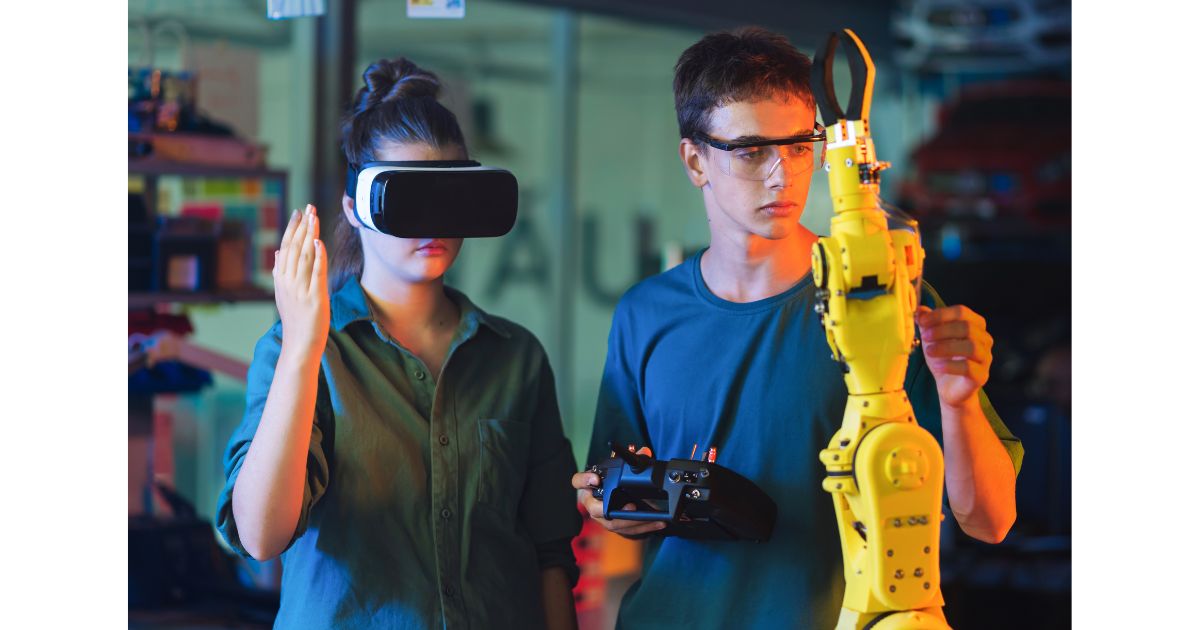
Technology is evolving at an unprecedented speed, and 2026 is expected to be a defining year for global innovation. From artificial intelligence reshaping industries to breakthroughs in automation, connectivity, and sustainability, the world is entering a new digital era. Businesses, governments, and individuals are adapting rapidly to stay relevant in this competitive landscape.
This article explores the future of innovation and the latest technology trends in 2026, explaining how they will transform industries and everyday life.
Introduction: A New Era of Technological Transformation
The year 2026 marks a major turning point where emerging technologies are no longer experimental—they are becoming essential tools in daily operations. Companies are investing heavily in smart systems, automation, and data-driven solutions to improve efficiency and reduce costs.
What makes this era unique is the combination of multiple technologies working together, such as artificial intelligence, robotics, cloud computing, and advanced connectivity. This integration is creating smarter cities, intelligent workplaces, and highly personalized user experiences.
1. Artificial Intelligence Becomes More Human-Like
Artificial Intelligence (AI) continues to be the backbone of modern innovation. In 2026, AI systems are expected to become more advanced, intuitive, and human-like in understanding context and emotions.
AI will not only analyze data but also predict outcomes with higher accuracy. Businesses will use AI for customer service, content creation, decision-making, and automation of complex tasks. Industries like healthcare, finance, and education will benefit from AI-powered diagnostics, risk assessment, and personalized learning systems.
The biggest shift is the rise of adaptive AI systems, which continuously learn and improve without human intervention.
2. Expansion of Hyper-Automation
Hyper-automation is one of the most impactful trends of 2026. It combines artificial intelligence, machine learning, robotic process automation, and analytics to fully automate business processes.
Organizations are moving toward end-to-end automation, reducing the need for manual intervention in repetitive tasks. This results in faster operations, lower costs, and improved accuracy.
Factories, offices, and even service-based industries are increasingly relying on automated workflows, making productivity levels significantly higher than before.
3. Rise of Quantum Computing
Quantum computing is slowly transitioning from research labs into practical applications. By 2026, more companies will begin using quantum systems for solving highly complex problems.
Unlike traditional computers, quantum computers process information at extraordinary speeds, making them ideal for cryptography, drug discovery, financial modeling, and climate research.
Although still in early stages, quantum computing has the potential to revolutionize industries that depend on massive data processing.
4. Growth of 6G and Ultra-Fast Connectivity
While 5G is still expanding globally, 6G technology is already shaping the future of communication. Expected to roll out in experimental phases around 2026, 6G promises ultra-low latency, faster speeds, and seamless global connectivity.
This will enhance technologies such as autonomous vehicles, smart cities, and real-time holographic communication. With near-instant data transfer, digital interactions will feel more natural and immersive.
The improved connectivity will also support advanced IoT ecosystems, where billions of devices are connected simultaneously.
5. Immersive Technologies: AR, VR, and Mixed Reality
Augmented Reality (AR) and Virtual Reality (VR) are becoming more integrated into daily life. In 2026, these technologies are expected to merge into mixed reality environments.
From virtual workplaces to immersive education systems, users will experience highly interactive digital environments. Businesses will use AR for product visualization, training simulations, and remote collaboration.
Entertainment, gaming, and tourism industries will also undergo major transformation through immersive experiences that blend physical and digital worlds.
6. Green Technology and Sustainable Innovation
Sustainability is a major focus of technological advancement in 2026. Companies are investing in green technologies to reduce environmental impact and promote energy efficiency.
Renewable energy systems, smart grids, and carbon capture technologies are becoming more advanced. Electric vehicles and energy-efficient devices are also gaining widespread adoption.
Innovation is no longer just about progress—it is also about responsibility toward the planet. Sustainable technology ensures long-term economic and environmental balance.
7. Cybersecurity in a Hyper-Digital World
As digital systems become more complex, cybersecurity is becoming a top priority. In 2026, cyber threats are more sophisticated, requiring advanced defense systems powered by AI and machine learning.
Organizations are adopting zero-trust security models, biometric authentication, and real-time threat detection systems. Data privacy regulations are also becoming stricter worldwide.
Cybersecurity innovation ensures that digital transformation remains safe, secure, and trustworthy for users and businesses.
8. The Rise of Smart Cities and IoT Ecosystems
Smart cities are no longer a futuristic concept—they are rapidly becoming reality. In 2026, urban areas are increasingly powered by Internet of Things (IoT) devices that collect and analyze real-time data.
These systems improve traffic management, energy usage, waste control, and public safety. Smart sensors and connected infrastructure make cities more efficient and livable.
IoT ecosystems also extend into homes and industries, creating fully connected environments where devices communicate seamlessly.
9. Biotechnology and Digital Health Revolution
Healthcare is experiencing a digital revolution driven by biotechnology and AI. In 2026, personalized medicine is becoming more common, allowing treatments tailored to individual genetic profiles.
Wearable devices continuously monitor health conditions, providing real-time insights and early disease detection. Robotics is also playing a key role in surgeries and medical procedures.
This integration of technology and healthcare is improving life expectancy and overall quality of life.
10. Human-AI Collaboration in the Workplace
Instead of replacing humans, AI is increasingly working alongside them. In 2026, workplaces are designed for human-AI collaboration where machines handle repetitive tasks while humans focus on creativity and strategy.
This partnership improves productivity and encourages innovation. Employees are becoming more tech-driven, learning to work with intelligent systems rather than compete against them.
The future workforce will require new skills centered around digital literacy and adaptability.
Conclusion: Embracing the Future of Innovation
The latest technology trends of 2026 highlight a world that is more connected, intelligent, and automated than ever before. From artificial intelligence and quantum computing to smart cities and sustainable innovation, every sector is undergoing transformation.
The future of innovation is not just about new inventions—it is about how technology improves human life, supports sustainability, and drives global progress.
As we move forward, the ability to adapt to these changes will define success for individuals, businesses, and societies alike.
